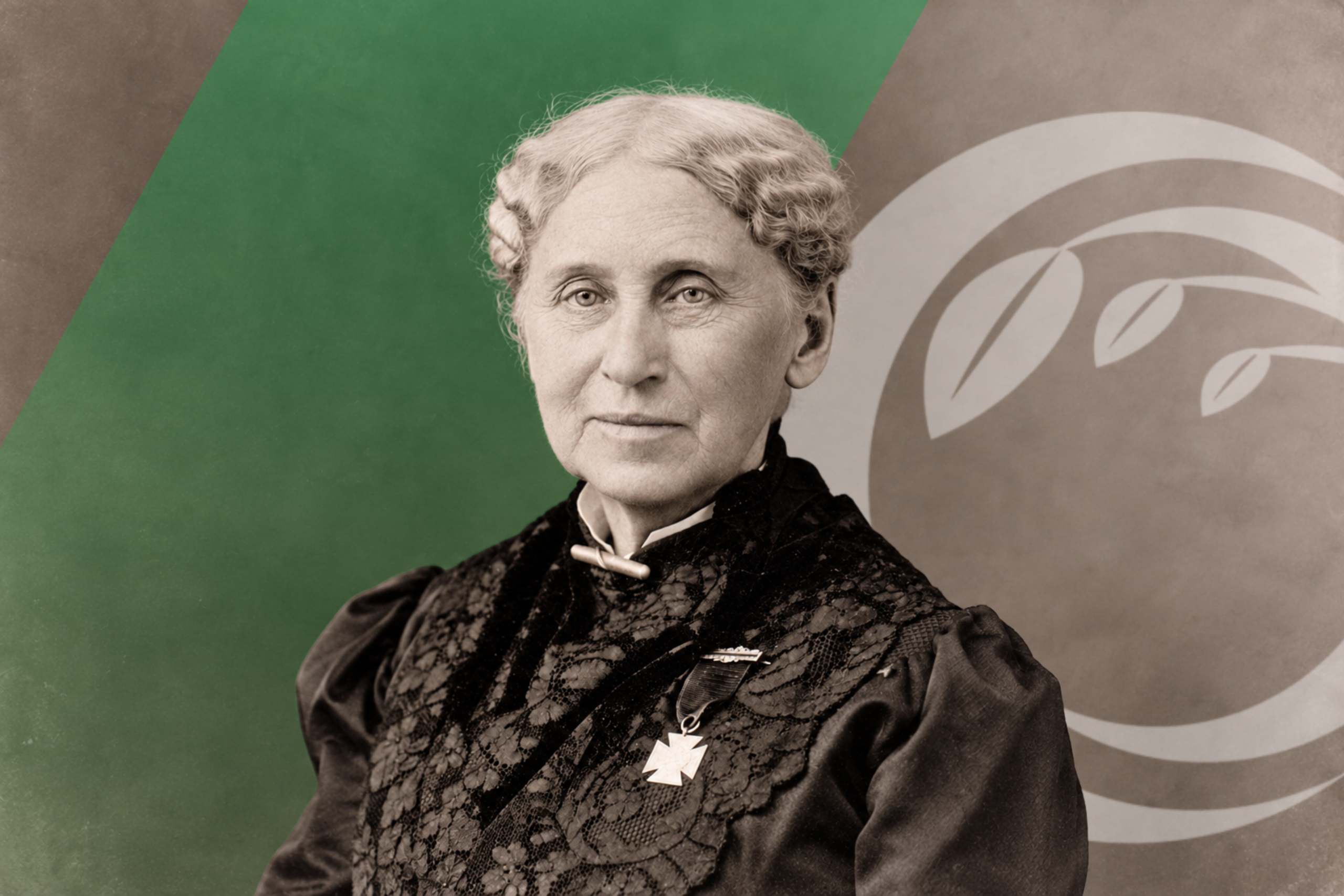
Remembering Annie Turner Wittenmyer; From Sandy Springs, Adams County, Ohio, to the Heart of a Nation’s Conscience
In the quiet community of Sandy Springs, Ohio, in 1827, a remarkable woman was born—Annie Turner Wittenmyer, whose compassion, determination, and leadership would one day ripple across an entire nation.
Annie’s early years in Adams County gave little hint of the national stage she would one day command, yet even as a young woman, she displayed a deep concern for the welfare of others. The daughter of John Grover Turner (1800–1862) and Elizabeth Cathelia Smith (1800–1867), Annie grew up in a home that valued faith, education, and service—principles that would guide her entire life.
At just 17 years old, she married William Edmond Wittenmyer (1814–1879), a successful merchant from nearby Jacksonville in Meigs Township. William, a widower with a young daughter, found in Annie both a devoted partner and an intellectual equal. Together they built a family—though of their four children, only one son, Charles (1855–1931), survived to adulthood.
In 1850, the Wittenmyer’s moved west to Keokuk, Iowa, a decision that would set the course for Annie’s extraordinary public life. There, she began organizing charitable efforts to help impoverished families and orphans. When the Civil War erupted, Annie’s compassion found a new and urgent purpose. She volunteered as a nurse, caring for wounded soldiers and witnessing firsthand the appalling conditions in wartime hospitals.
Determined to bring order and humanity to the chaos, Annie became president of the Iowa Soldiers’ Aid Society, coordinating vast networks of volunteers who supplied food, clothing, and medicine to Union troops. Her advocacy for better nutrition and sanitary conditions—especially her innovation of special diets for recovering soldiers—earned her national recognition and the enduring respect of military leaders.
After the war, Annie’s passion for reform only grew. She became a powerful voice for women’s rights, temperance, prison reform, and public health. As president of the Women’s Christian Temperance Union, she championed not only moral reform but also practical measures to
protect families and children. She later founded the influential magazine The Christian Woman, which she edited for 11 years, giving a national platform to women’s voices and causes.
Annie was also a gifted writer and hymn composer, using her pen to inspire faith and compassion. Her tireless spirit carried her from classrooms to battlefields to national podiums—where she fought for justice and mercy in equal measure.
In her later years, Annie made her home near Sanatoga, Pennsylvania, where she continued writing and organizing until her death on February 2, 1900, at the age of 72. She was laid to rest in Edgewood Cemetery, Pottstown, Montgomery County, Pennsylvania—far from her Ohio birthplace, yet forever connected to the values of service and integrity that took root in Sandy Springs.
Today, Annie Turner Wittenmyer is remembered not just as a reformer and humanitarian, but as one of the 19th century’s most steadfast champions of human dignity—a woman whose compassion bridged the distance between home and history.